The short answer
No. He was threatened with it, formally, on the day before his sentence, and the minute of that examination records words only. He was not taken to the instruments.
What the record says
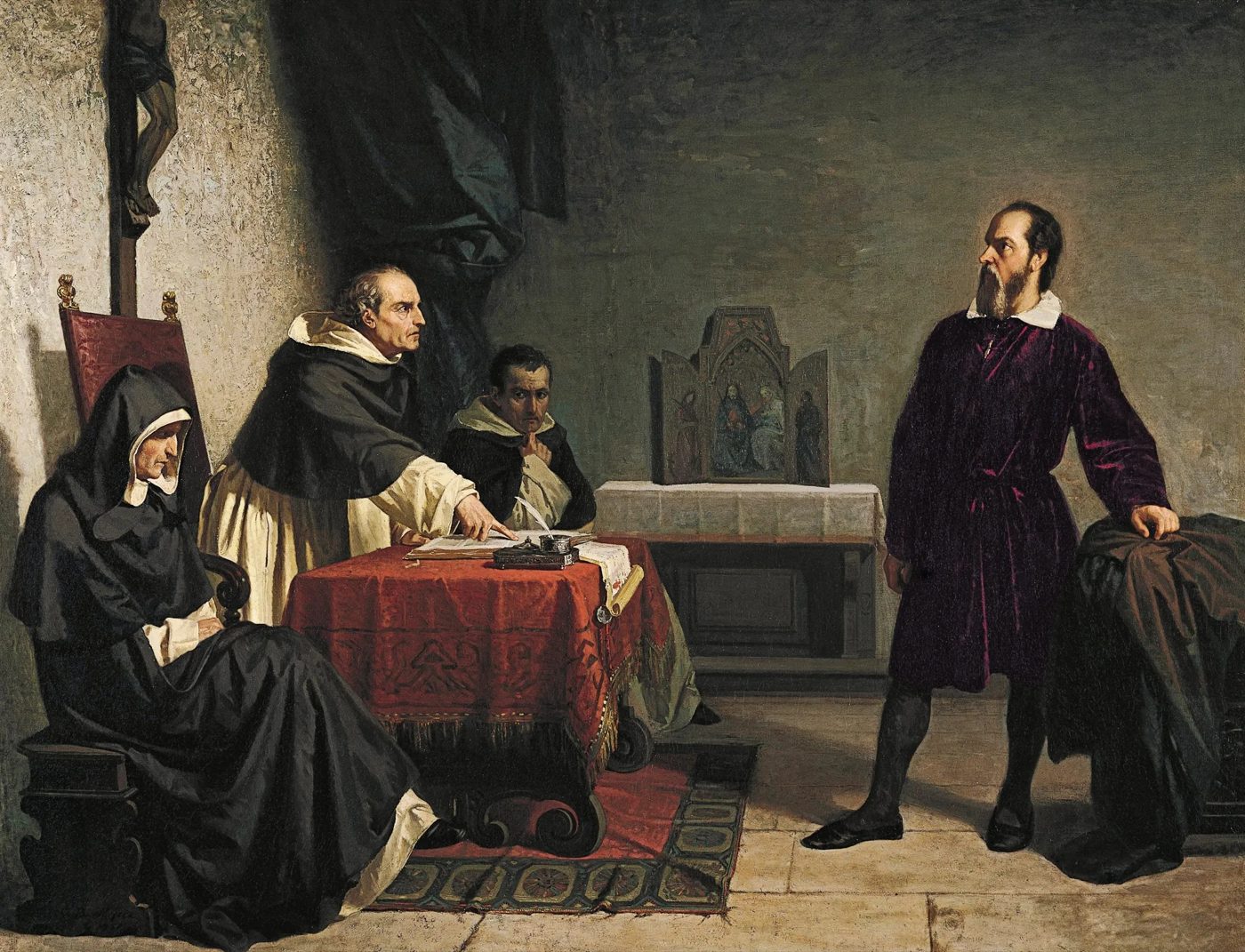
On 16 June 1633 a decree ordered that Galileo be questioned about his intention in writing his book, and threatened with torture as well. The decree set out the rest of the week in advance.
The examination took place on 21 June. The minute survives, with his signature. Asked about his intention, he answered, in effect, that he had nothing to add and was there to obey.
The torture procedure of the time came in stages. First the threat, spoken in the ordinary courtroom. Then being taken into the torture chamber and shown the instruments. Only after that, the instruments themselves. The minute of 21 June records the first stage and nothing after it.
Why people think he was
The sentence of 22 June says the tribunal had found it necessary to proceed against him by a rigorous examination, and in the Holy Office's language that phrase meant examination under torture. It is the strongest piece of evidence on the other side, and it is a real one.
The usual reading, argued as long ago as 1879, is that the recorded threat satisfied the formula and nothing further was done. Nothing in the minutes contradicts it. The rules of the time also required a physician's opinion before torture and spared the old and the ruptured; Galileo was sixty-nine and had a medical certificate from the previous December recording a serious hernia.
The torture story became popular in the nineteenth century, in books that told the trial as a war between science and religion. It is not in the file.
What it meant to him
None of this makes the threat small. A tribunal had told a sick old man, to his face, that the next step would be the instruments. The next day he knelt and abjured.
This site is not connected with the Broadway production of Galileo.