The short answer
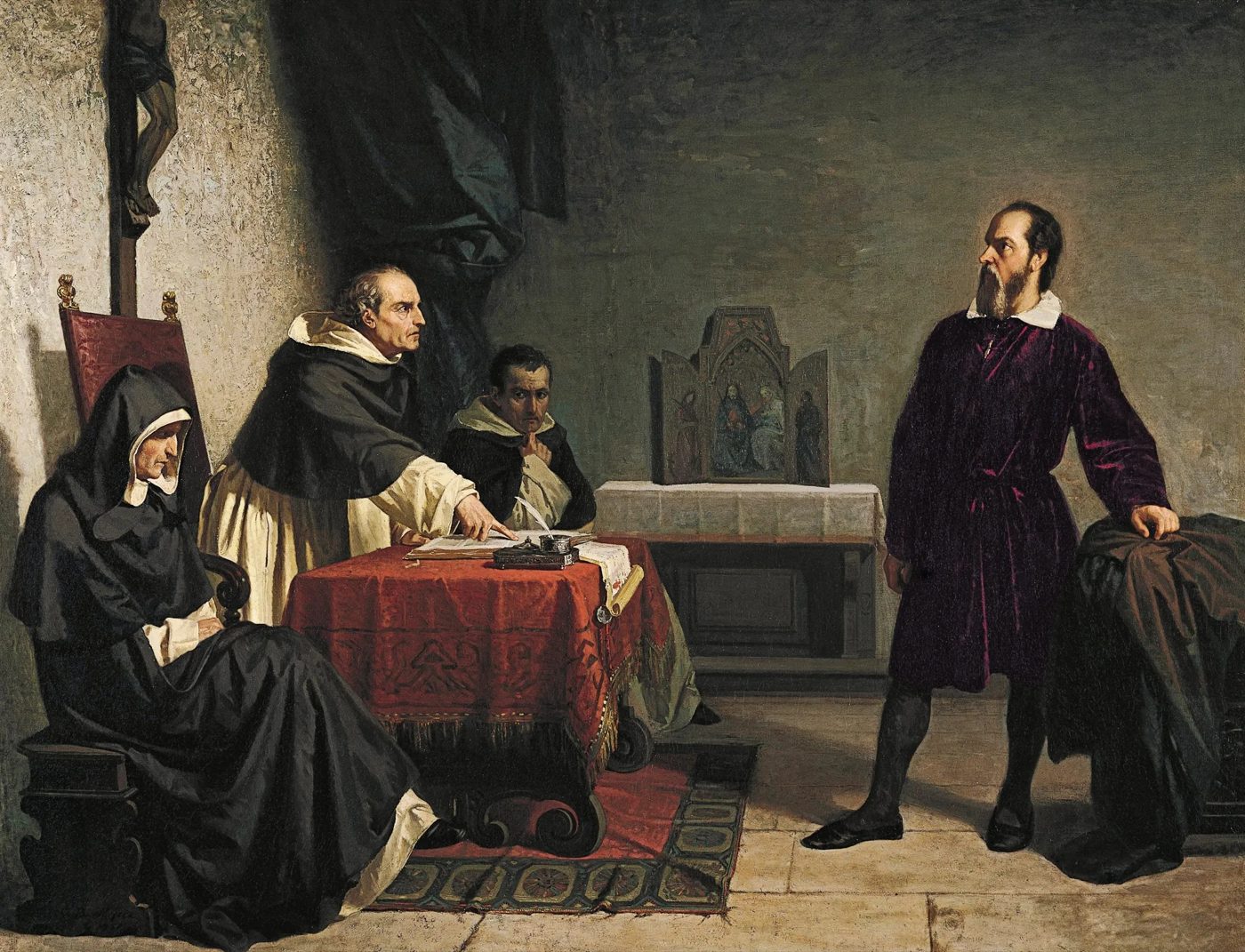
The charge in 1633 was that he had broken an order given to him in 1616 by publishing his Dialogue Concerning the Two Chief World Systems. The book was the offence.
1616: two papers
In February 1616 eleven theologians declared the sun-centred system foolish and absurd in philosophy. The pope ordered Cardinal Bellarmine to warn Galileo to abandon it, and only if he refused, to give him a formal order not to hold, teach or defend it in any way.
A note in the file dated the next day records the formal order as given. Nothing in the file records a refusal. Three months later Bellarmine gave Galileo a signed certificate saying only that the opinion could not be defended or held.
Seventeen years later both papers were produced at the trial. They say different things. The case lived in the gap between them.
1632: the book
Rome licensed the Dialogue on conditions: the moving earth was to be treated only as a hypothesis, and the ending was to carry the pope's own argument, that God could produce the world we see by means no one could guess.
Galileo did as he was told. He put the argument on the last page, in the mouth of Simplicio, the slow-witted defender of Aristotle who has lost every exchange for four hundred pages. Pope Urban VIII had been his friend and admirer. Nobody in Rome needed to be told whose argument it was.
Was Simplicio meant to be the pope?
That is often said, and no document supports it. The character was not a portrait. What is documented is the choice of mouth: the censors supplied the argument and left it to Galileo to work it in, and he gave it to the man his own preface describes as blinded by his reputation.
The verdict
On 22 June 1633 he was found vehemently suspected of heresy, made to abjure, and his book was banned. The sentence was sent to every nuncio and inquisitor in Europe.
This site is not connected with the Broadway production of Galileo.